Portfolio
Smarter travel cost forecasting with Trip Estimator
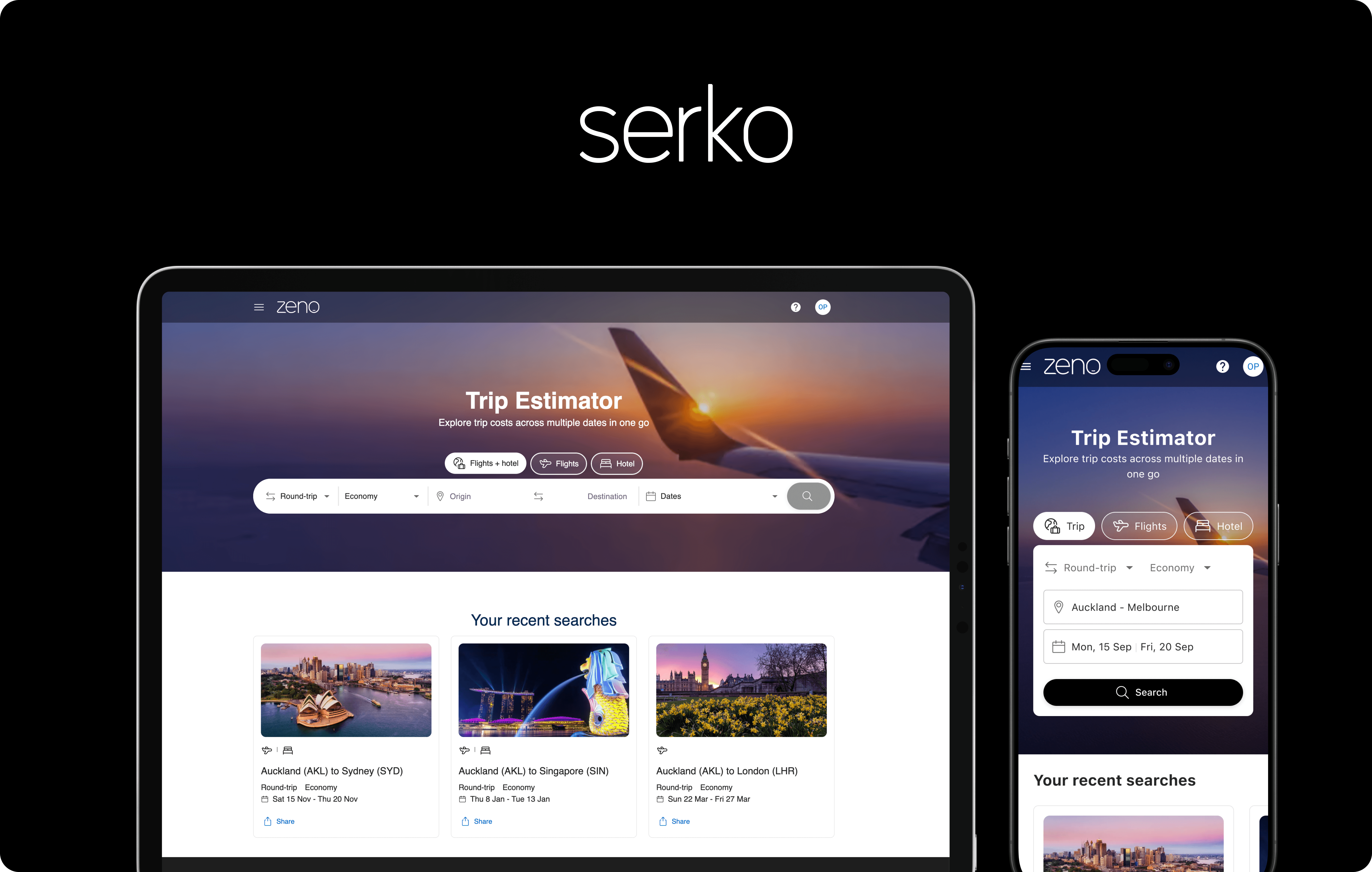
Serko - Trip Estimator -
Overview
Background
As part of the Design team at Serko, a New Zealand-founded travel-technology company specialising in corporate travel booking, I contributed to the design and testing of Trip Estimator. This tool helps business travellers quickly estimate total trip costs across flights and hotels, identify pricing trends, and make more informed booking decisions without leaving the Serko ecosystem.
Trip Estimator was envisioned as a cross-platform product supporting all Serko brands, including Zeno, GetThere, and other partner platforms.
The project was developed in partnership with Sabre, leveraging and extending the capabilities of their Leisure APIs for business-travel use. This integration shaped the product’s scope, as it relied on multiple APIs to present users with a comprehensive, real-time trip-estimate view.
Context & Problem
Corporate travelers and managers lack a fast, intelligent way to estimate total trip costs before booking. They often switch to external tools like Google Flights or Booking.com, causing platform leakage and missed insights.
Problem Statement
Manual research and disconnected data sources make trip planning slow and inefficient. Travellers guess the best time to book, leading to budget overruns and policy non-compliance.
Business Impact
Reducing leakage, increasing adoption, and positioning Zeno as a predictive, insight-led travel platform.
Project phases
There were initial design explorations created for a presentation at the Global Business Travel Association (GBTA) Convention. The project was already underway when I joined, and my role started from the first round of research.
The project had several overlapping phases, largely due to technical dependencies with our partners, but in essence, we followed a sequence that combined concept validation, prototype testing, and API feasibility exploration.
design mockup
Research
1st Round
co-design workshop
technical feasibility
DESIGN REFINEMENT
research
2nd round
Research Round 1 - NORAM (UserTesting)
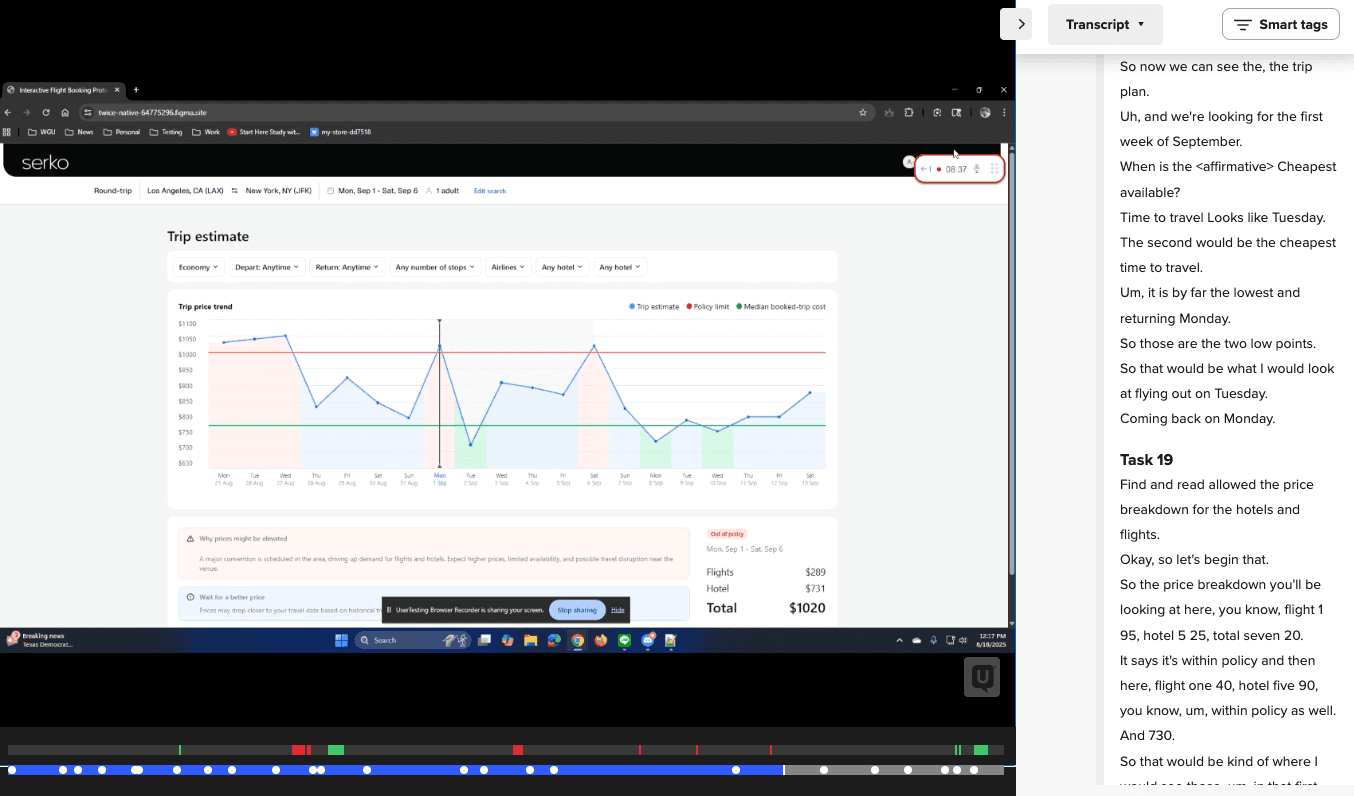
The research team organised the user testing using UserTesting platform. My role in the research phase was to provide interactive prototype, review selection criteria of participants, write the usability test script and support analysis of video recordings.
Overview
5 unmoderated usability sessions
Study combined survey-style questions with prototype interaction tasks using a Figma Make prototype
I built the prototype using designs presented at the GBTA Convention.
Research Goals
We wanted to understand:
How do corporate travelers currently research trip costs?
What level of flexibility do they have in planning?
Would an estimator concept resonate with them?
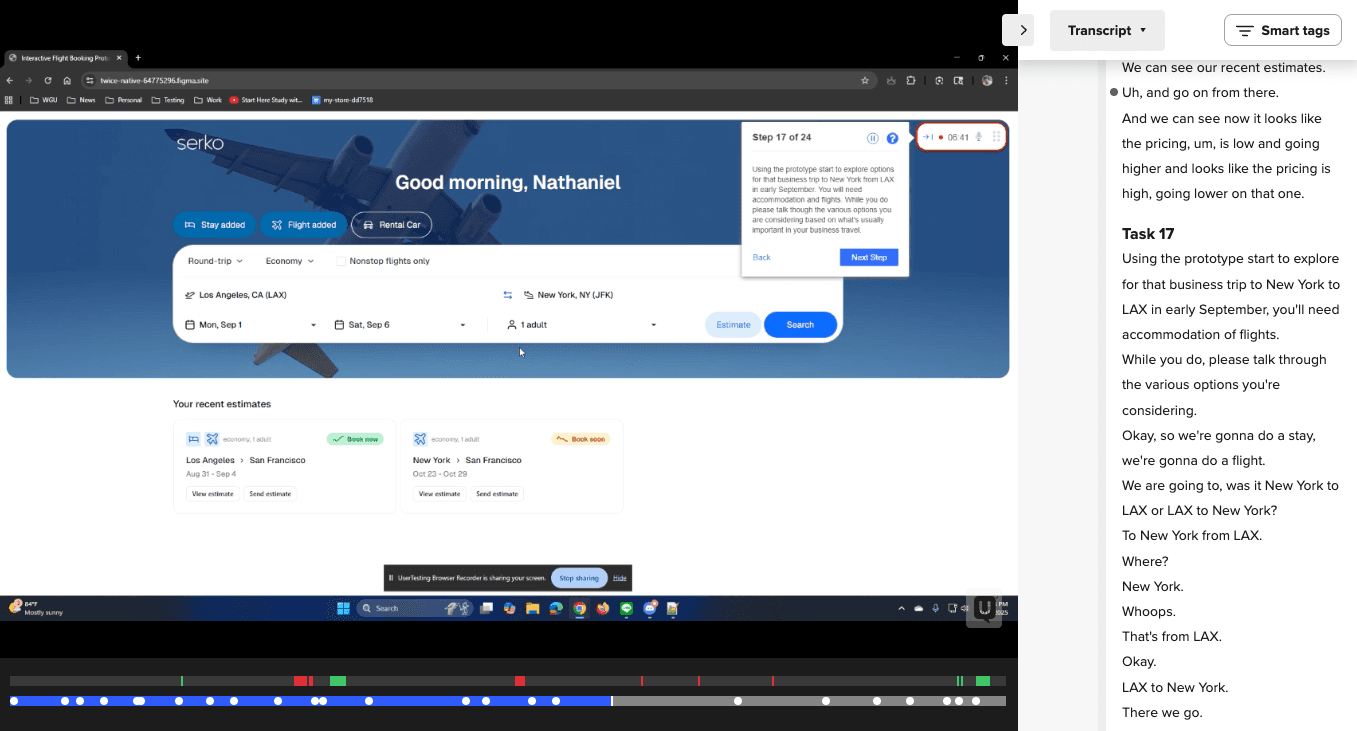
Theme
Insight
Implication
Terminology confusion
4/5 users ignored “Estimate” and went straight to “Search.”
Label and entry point unclear; users expect immediate precision, not range-based predictions.
Graph interaction
Users misinterpreted graph colors and struggled with flexible date range logic.
Simplify visualization—make savings and date patterns explicit.
Loyalty & constraints
Time of day and carrier loyalty mattered more than price for most users.
Flexibility assumptions need validation; “cheapest” isn’t always relevant, arriving work-fit” was prioritised.
Adoption barriers
Generous budgets reduce need to “hunt” for savings.
Emphasise efficiency and convenience, not only cost savings.
Recommendations
May resonate with budget-sensitive or decision-making travellers.
Repeat study with APAC participants to explore regional differences.
Consider quantitative validation (survey) for broader appetite assessment.
Co-Design Workshop
Overview
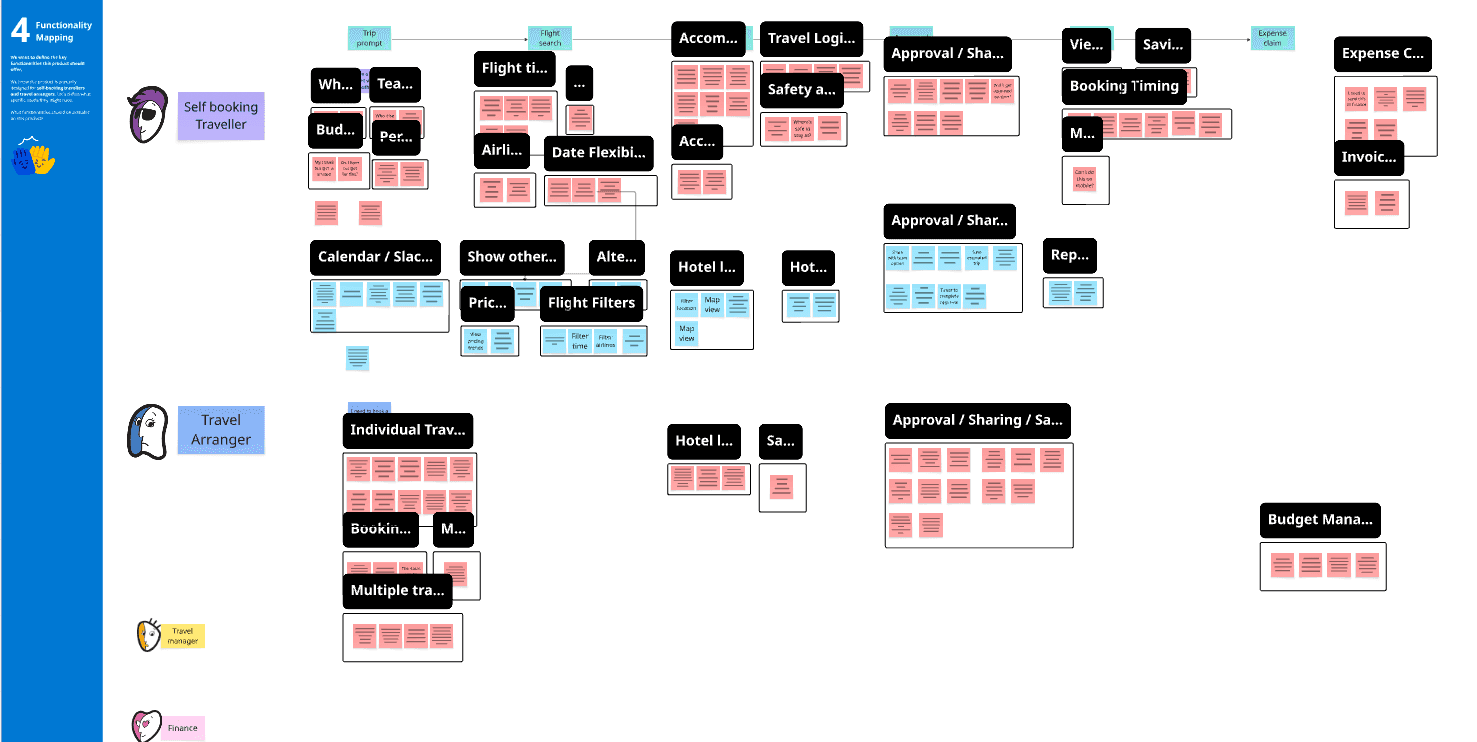
I organised a co-design workshop to understand how internal stakeholders perceived and envisioned the Trip Estimator. The session was structured in five parts:
Introduction – led by the Product Manager to align on goals and context.
Research Findings – presentation of key insights from the first round of UX research.
User Flow Mapping – collaboratively defining how users would move through the estimator experience.
User Needs Identification – uncovering core traveller and manager pain points and priorities.
Solution Ideation – brainstorming and presenting potential design directions to address those needs.
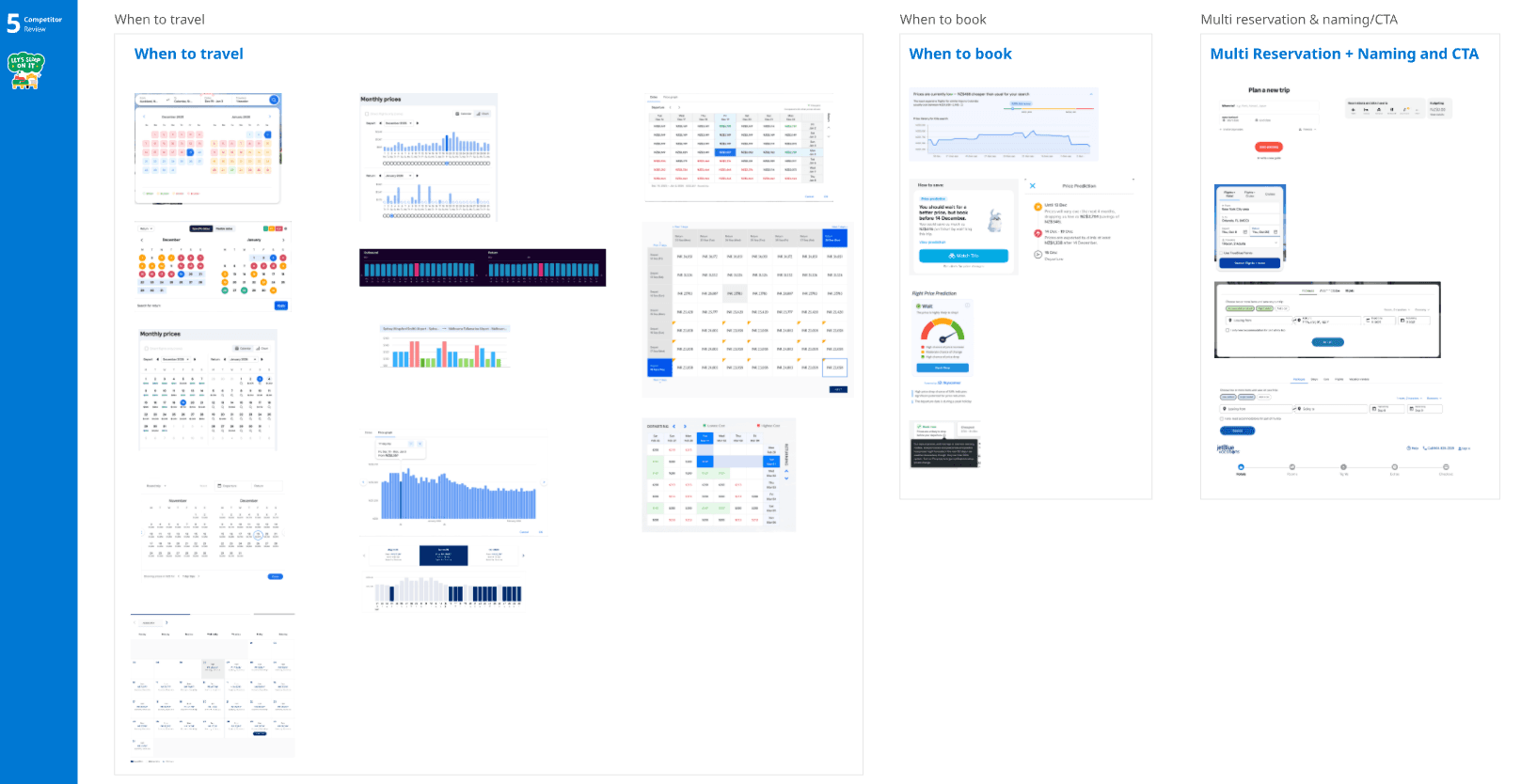
Key takeaways
Airlines and hotel chains: Loyalty programs and familiarity influence booking choices as much as price or location.
Integration: Seamless links with calendars, Slack, approval and booking flows to reduce duplicated effort.
Sharing: Travel plans are often dependent on team schedules—requiring easy sharing and approval flows.
Simplicity: Stakeholders prefer a quick, lightweight estimation rather than new layers of decision-making.
Design Refinement
To refine the designs for the second round of testing, I drew insights from three key sources: findings from the first round of user testing, the co-design workshop, and API documentation.
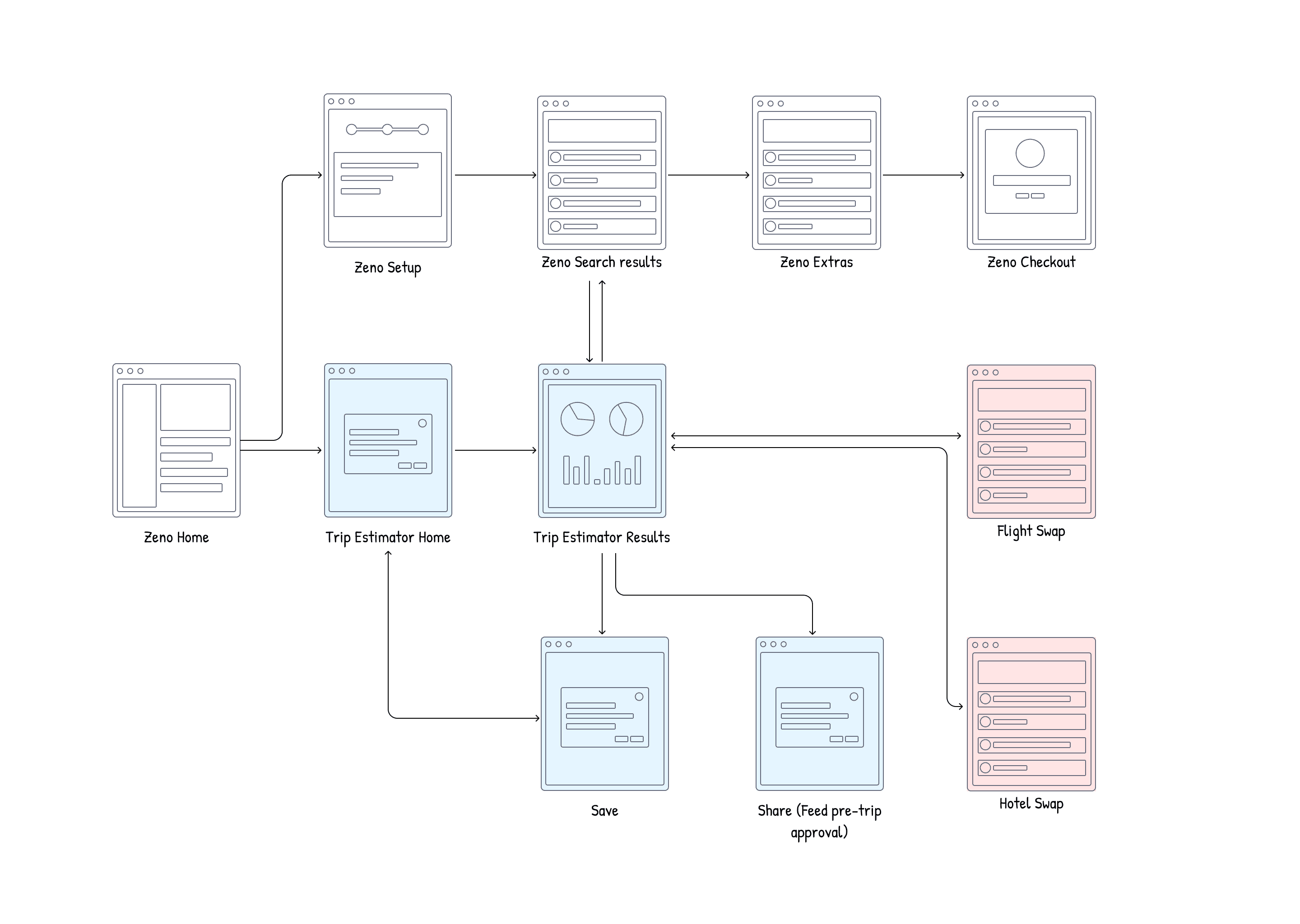
Mapping
The user flow for Trip Estimator is intentionally simple, as the tool is designed to integrate with and feed into other Serko products such as Search, Booking Flow, and Trip Pre-Approval.
Wireframes
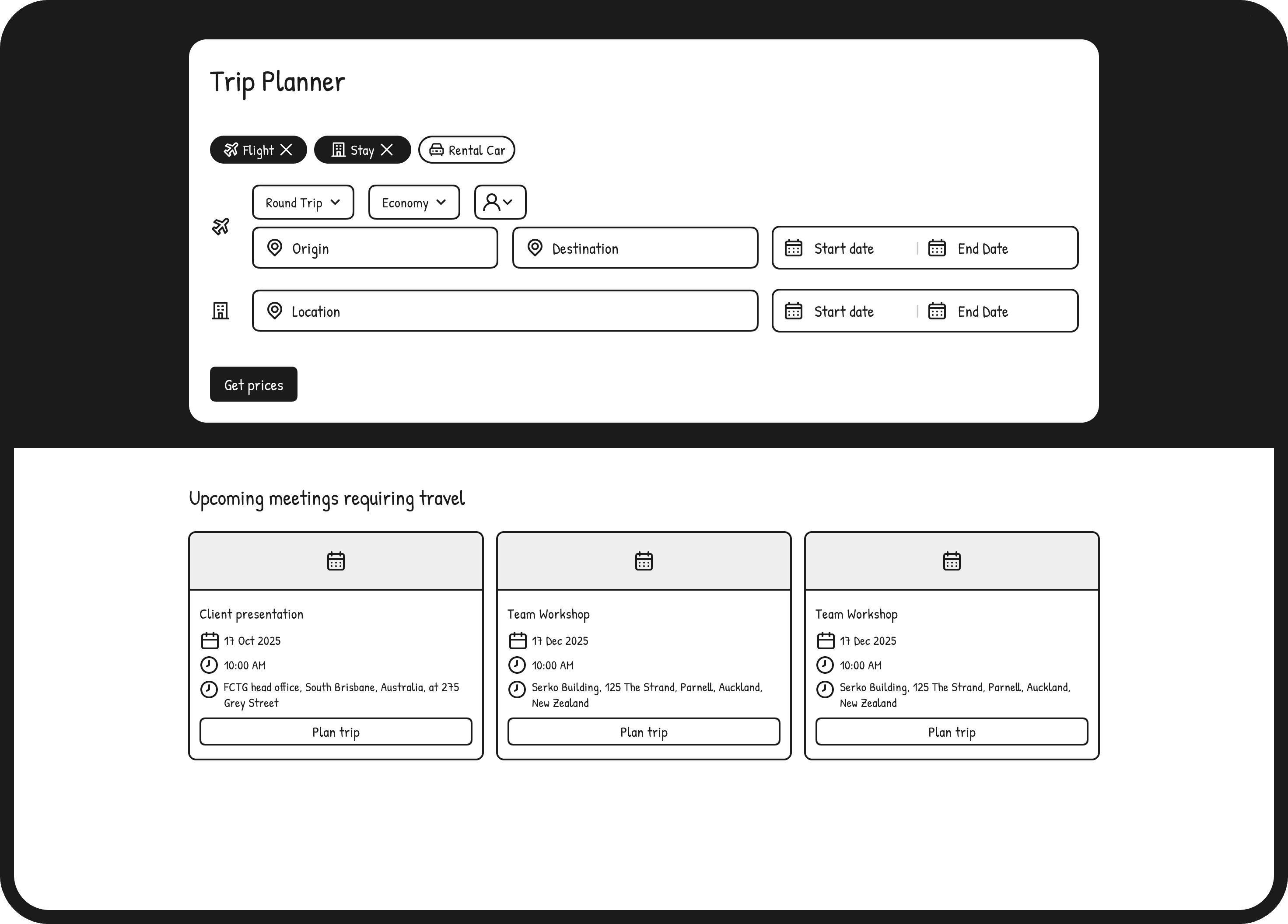
The wireframes were created to translate the research insights into concepts that could be validated from a technical perspective. They were the base to create alignment with architecture and development teams, helping to clarify data dependencies, API integrations, and platform constraints early in the process.
Design
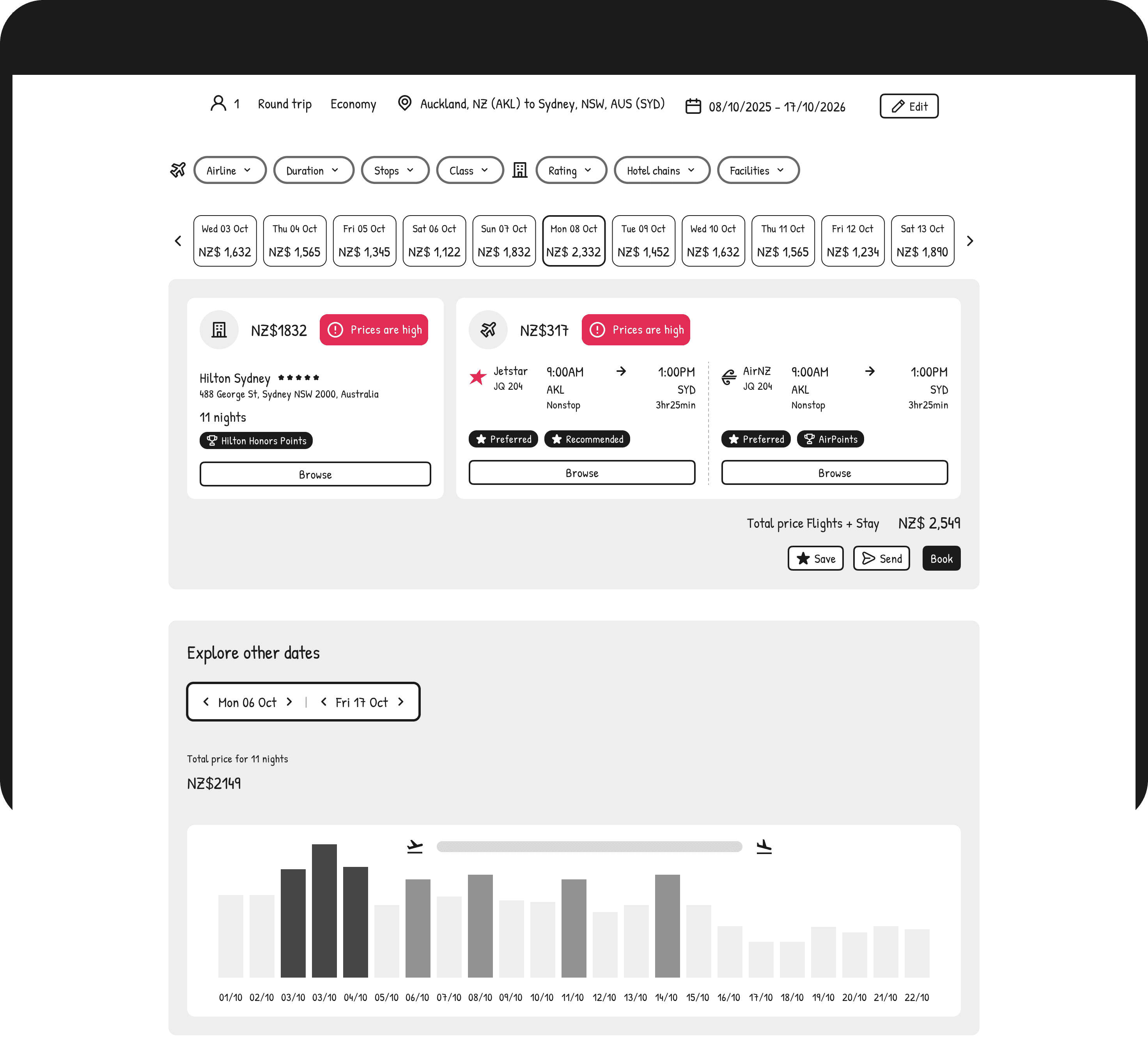
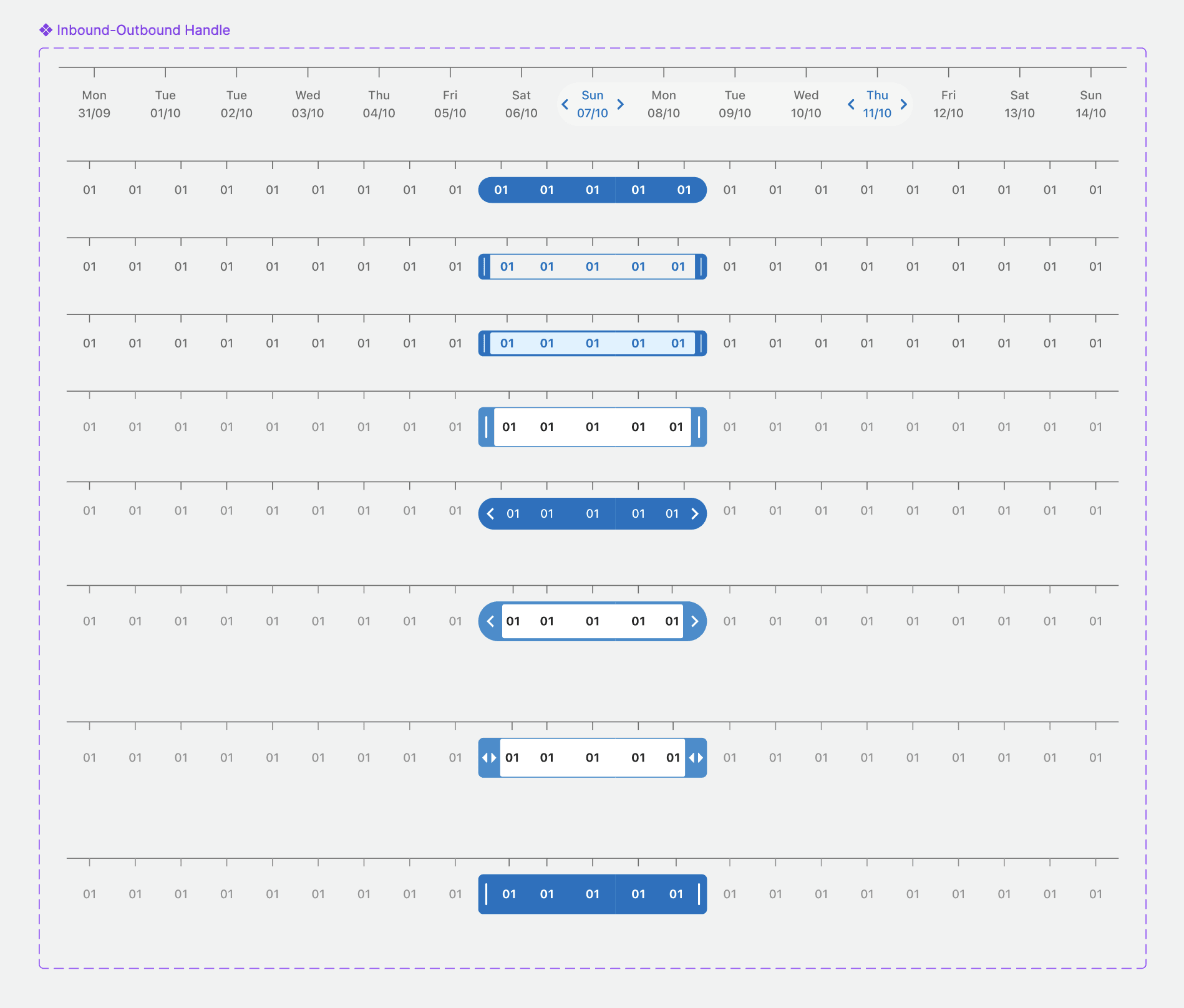
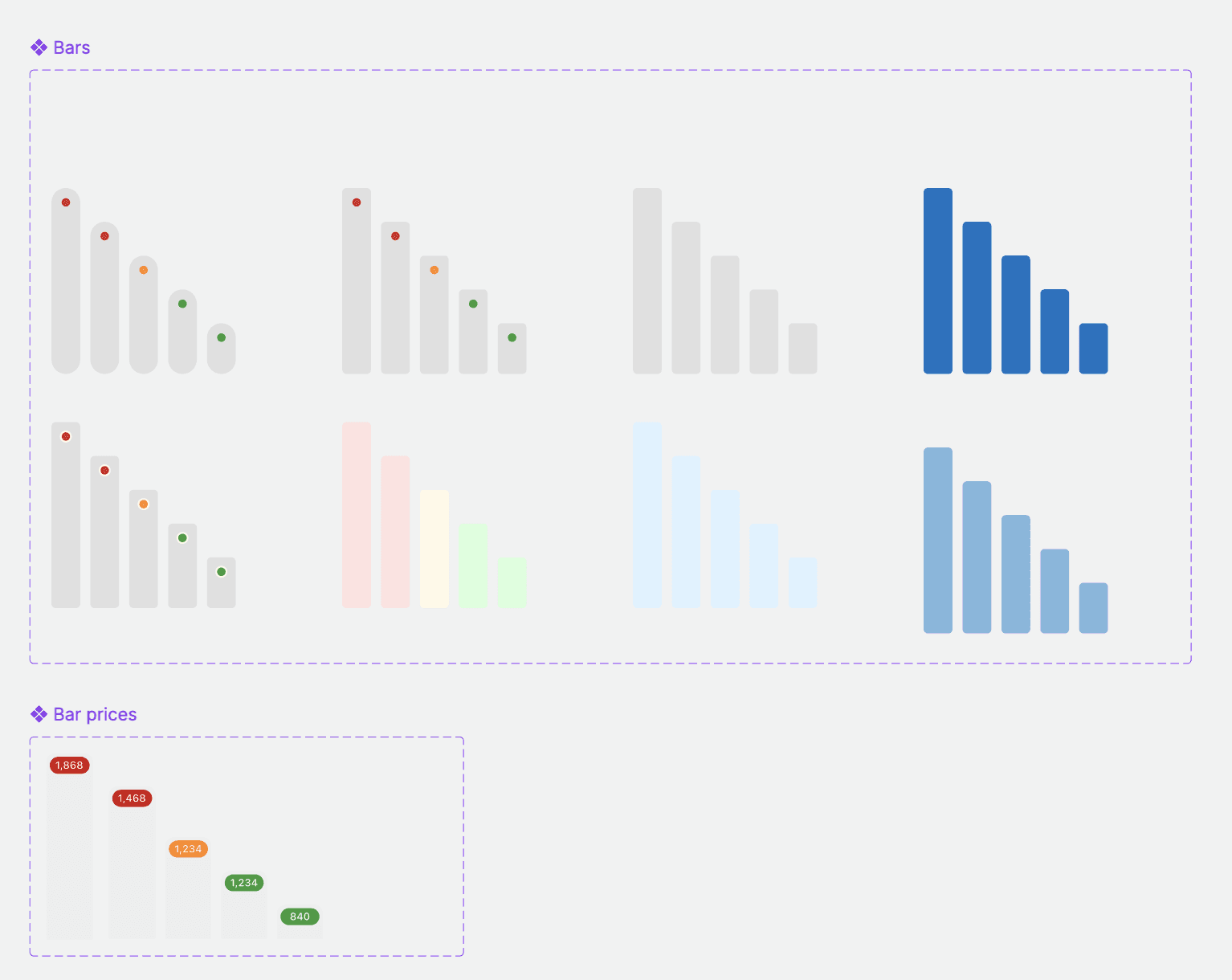
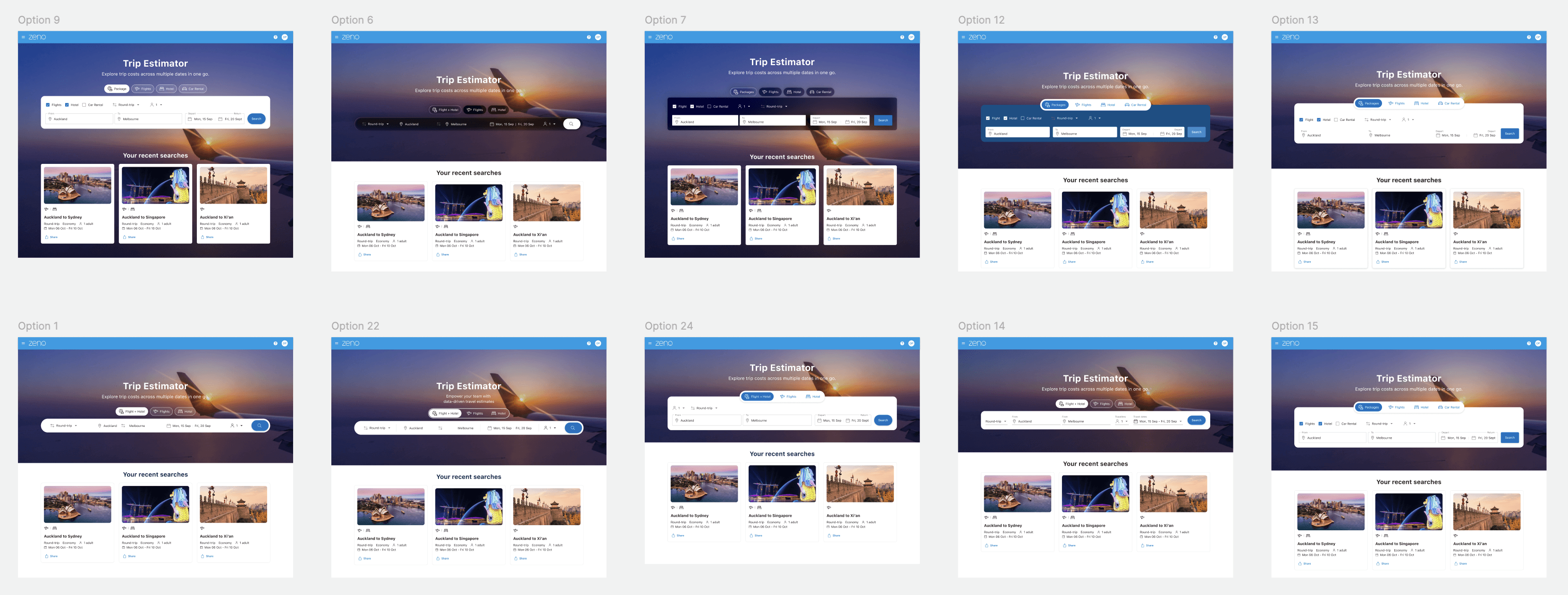
Each aspect of the interface was explored and validated internally with the design system team. Since the design system was still in its early stages and did not yet fully support this project, I had the opportunity to experiment with new components and layouts.
This flexibility allowed me to design more effective ways to visualise and communicate the complex data behind trip estimations.
Interactive Prototype
The prototype was built in Figma Make, enabling full interaction. Users could navigate freely, type, and search for trips just as they would in a live product.
This high level of interactivity provided more realistic user behaviour during testing, offering valuable insights into how travellers would naturally explore and use the tool.
Project direction shift to conversational AI interface
After a deeper investigation into the API capabilities, including AI-driven prompt features, we identified an opportunity to deliver trip estimates through a conversational interface rather than a traditional UI. This approach would allow us to utilise the full scope of the API, speed up front-end implementation, and create a more flexible interaction model. However, because it represented a substantial change in how users would engage with the tool, we planned a second round of user testing to validate whether travellers and travel managers would understand, trust, and adopt a conversational experience for trip planning.
Overview
Validate whether travel managers perceive greater value in predictive trip estimation tools.
Explore if APAC users demonstrate higher price sensitivity or travel flexibility compared to NORAM participants.
Test an updated prototype that incorporates recommendations from the first usability study while aligning with technical constraints.
Research Goals
We wanted to understand:
How do corporate travelers currently research trip costs?
What level of flexibility do they have in planning?
Would an estimator concept resonate with them?
What are the differences across regions and roles (self-bookers vs travel managers)?
Regional relevance
Trip Estimator was viewed as particularly valuable for early budgeting and pre-approval stages with APAC customers.
Initially prepare the release of the product in the APAC market.
Graph interaction
Participants appreciated visual trends but were confused about the difference between each view
Wider test to choose the best way to display data
Multiple tools
Managers often switch between Zeno, Google Flights, and airline sites to cross-check prices and availability.
Strengthen integrations to reduce context switching and build confidence in the platform results.
Cost vs satisfaction
While saving money is important, traveller preference outweigh cost savings.
Airlines and flight is a huge driver when selecting a flight.
Integration
Users were uncertain on how this would link to current platforms, and reinforced the need to have integrations with current products
Budget estimate should feed directly into search, booking, and approval systems.
Recommendations
Prioritise APAC for initial rollout Feedback from APAC travel managers indicated higher perceived value in early budgeting and trip pre-approval use cases. Launching first in this market could drive stronger adoption and proof of concept.
Simplify and clarify data visualisation Across both studies, users struggled to interpret the graph views and flexible date logic. A follow-up test should compare simplified visual treatments.
Deepen integration across Serko products Participants expected the estimator to connect with existing search, booking, and approval workflows. Integrating Trip Estimator outputs directly into these flows will make the experience feel cohesive and actionable.
Position the tool around convenience, not just savings Both corporate travellers and travel managers prioritise reliability, loyalty programs, and traveller comfort . Emphasising these benefits and traveller priorities will increase the product’s appeal beyond just cost savings.
Research Round 3 - APAC Travel Managers
The research was coordinated in collaboration with one of our partners and their account managers. We conducted interviews with six travel managers across the APAC market to understand their needs and behaviours. My role included writing the interview and test scripts, facilitating the usability testing sessions, observing and taking notes during interviews, and contributing to the analysis of findings.
Overview
Research Goals
Regional relevance
Trip Estimator was viewed as particularly valuable for early budgeting and pre-approval stages with APAC customers.
Initially prepare the release of the product in the APAC market.
Graph interaction
Participants appreciated visual trends but were confused about the difference between each view
Wider test to choose the best way to display data
Multiple tools
Managers often switch between Zeno, Google Flights, and airline sites to cross-check prices and availability.
Strengthen integrations to reduce context switching and build confidence in the platform results.
Cost vs satisfaction
While saving money is important, traveller preference outweigh cost savings.
Airlines and flight is a huge driver when selecting a flight.
Integration
Users were uncertain on how this would link to current platforms, and reinforced the need to have integrations with current products
Budget estimate should feed directly into search, booking, and approval systems.
Recommendations
Next steps
As the Trip Estimator project is still in progress, with implementation scheduled for January 2026, the following steps have been planned to ensure a smooth rollout and continued refinement:
Graph Prototype Testing: Conduct a larger round of usability testing to evaluate the most effective way to display price ranges, flexible dates, and other key visuals. The previous small sample of tests indicates we still haven't reached a optimal solution.
API Updates with Sabre: Collaborate closely with the Sabre team to implement necessary API changes to meet the needs of our product.
Front-End Alignment: Hold internal alignment sessions with the front-end development team to confirm technical feasibility, clarify design specifications, and synchronise development priorities with the evolving prototype.